Authentic Thai Therapy, Rooted in Tradition.
Kaya Thai Therapy was founded to bring the authentic healing arts of Thailand to Colindale, North West London. Every treatment draws on centuries-old techniques that work with the body as a whole, addressing tension, restoring movement, and supporting long-term wellbeing.
Our Roots
Kaya Thai Therapy is grounded in the cultural heritage of Thailand. Every treatment follows Nuad Bo'Rarn, the classical Thai bodywork tradition passed down through generations of skilled practitioners.
In Pali and Thai culture, “Kaya” refers to the physical body. It is the name we have chosen because it reflects our central belief: the body is a complete system, not a collection of isolated symptoms. Treatments are designed to address the whole person, whether that is postural tension from desk work or tightness from regular physical training.
Nuad Bo'Rarn: The Tradition Behind the Treatment
A Lineage Carried Through the Wats
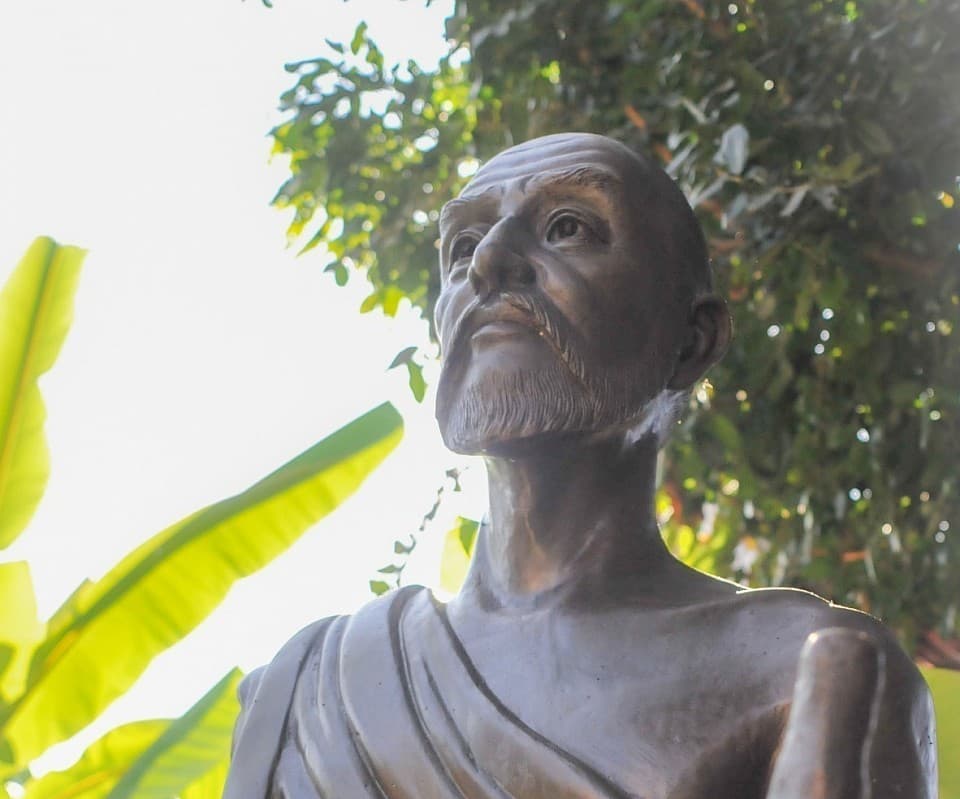
Traditional Thai medicine traces its origins to Jivaka Kumar Bhaccha, a physician of ancient India who served as head doctor to the original Sangha, the monastic community gathered around the historical Buddha. The knowledge he is credited with passed into Thailand alongside Theravada Buddhism, and for centuries the wats (the Buddhist monasteries) were the places people went for treatment of physical, emotional and spiritual suffering.
In 1832, King Rama III ordered the surviving medical texts to be carved into the stone walls and pillars of Wat Pho in Bangkok. Those epigraphs map the energy pathways of the body and set out the treatment protocols that practitioners of Nuad Bo'Rarn still work from today. The practice has continued largely unbroken from that point forward.
The Three Essences and the Four Elements
Thai philosophy understands a person as the meeting of three distinct essences, each as real as the others:
- The body — the matter of a person: what can be seen, touched and measured.
- Vital energy — the organising force that holds the parts of a person together as a working whole.
- Citta — often translated as mind or heart, but broader than either: thought, feeling, intention, imagination, aspiration.
Health, in this view, is the dynamic balance of four elements, Earth, Water, Wind and Fire, within and across all three essences. Of these, Wind is treated as the primary regulator, because it animates the other elements and governs every kinetic process in the body, from circulation to the movement of breath and digestion. When Wind moves freely, the system is regular. When it stagnates, restriction, fatigue and discomfort follow.
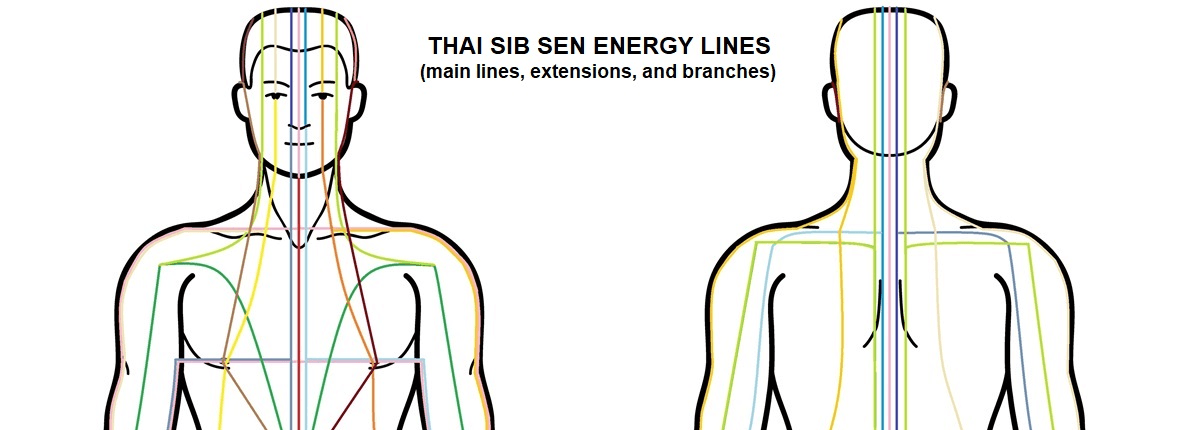
Vital energy travels along ten primary pathways known as Sen, all originating near the navel and extending outwards through the body. Nuad Bo'Rarn works along these lines with rhythmic compression and assisted stretching, with the aim of restoring movement where it has become bound.
Metta: The Intention Behind the Work
In Buddhist thought, Metta (loving kindness) is the disposition a person cultivates toward themselves and others as part of daily practice. The traditional view of Nuad Bo'Rarn is that giving a treatment is one of the practical applications of Metta. The therapist works with focused attention and a settled mind. The session becomes a form of meditation for both people in the room.
The tradition names four states of mind the practitioner brings to the work:
- Loving kindness — the intention to be of help.
- Compassion — the wish to ease suffering.
- Vicarious joy — quiet pleasure in another person's progress.
- Equanimity — steadiness, without attachment to a particular outcome.
What This Means in a Session
The philosophy is not decoration. It shapes how the work is done, and the experience differs from oil-based Western modalities in three concrete ways.
1. Restorative rather than sedating
Traditional Thai work is structured to move stagnant Wind and restore flow along the Sen, which is why clients typically leave a session clear-headed and physically loosened rather than sleepy. It is well suited to people who want to continue their day afterwards.
2. Circulation through the whole limb
Compression along the Sen, combined with rocking and joint mobilisation, works the limbs from foot to hip and hand to shoulder. Research into traditional Thai foot work has examined its effects on local circulation and range of motion. The intent of the tradition is to clear the line, not to treat a single muscle in isolation.
3. Range of motion through assisted stretching
Nuad Bo'Rarn is sometimes described as passive yoga. The therapist takes the client through assisted stretches that the client could not easily reach unaided. This is the part of the tradition that addresses stiffness at a structural level, mobilising joints and lengthening the fascia along the Sen.
Who this work tends to suit
Nuad Bo'Rarn tends to suit people looking for:
- Bodywork that leaves them awake and mobile, rather than sedated.
- Greater freedom of movement through assisted stretching.
- A considered approach to areas of long-standing tension and restricted flow.
- A tradition with documented roots, not a generic spa treatment.
Resources
- Thai Massage: A Traditional Medical Technique — Richard Gold
- A randomised crossover trial comparing Thai and Swedish massage for fatigue and depleted energy
Ready to experience authentic Thai Therapy?
Register your interest and get a free Head Massage and Hot Towel for your first treatment.